


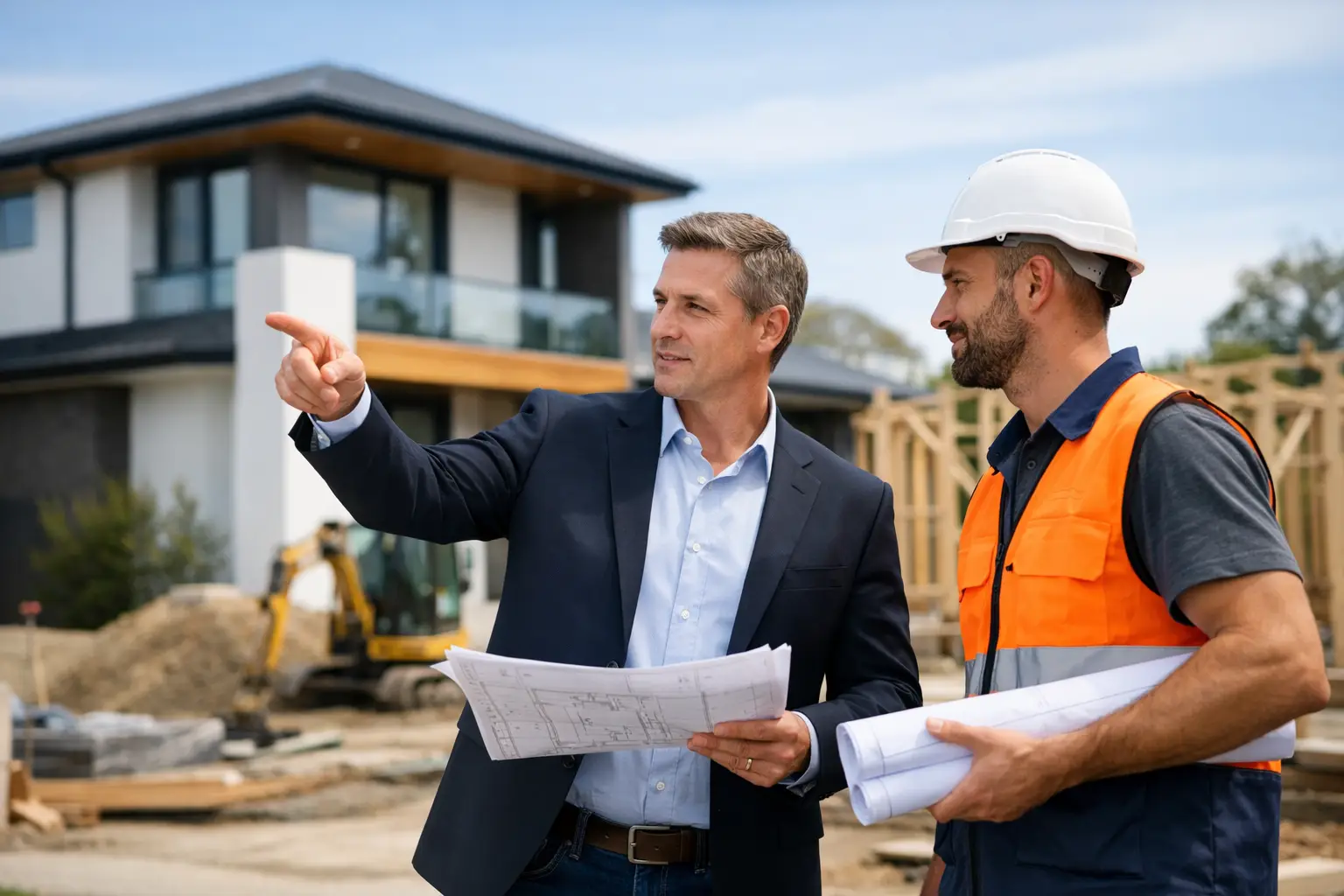
24 Aug Project Manager Versus Builder for Sydney Homes
A substantial home project can appear straightforward on paper: appoint a builder, approve the plans and wait for the keys. In practice, the project manager versus builder decision shapes how confidently you move through every major choice, from early budgets and approvals to joinery details, variations and the final handover.
For a new family home in Vaucluse, a duplex in Maroubra or an apartment renovation in Double Bay, the question is not which role is more valuable. You need to understand who is responsible for what, when their interests overlap and where gaps can emerge. The right structure gives you clear accountability while protecting the standard, timing and long-term value of your property.
Project manager versus builder: the core difference
A builder is responsible for physically delivering the construction works defined in their building contract. This generally includes organising site trades, materials, site safety, construction sequencing and completing the agreed scope to the required standard. A capable residential builder brings practical construction knowledge, reliable trade relationships and an understanding of how to turn detailed documentation into a finished home.
A project manager acts on behalf of the client across the broader delivery process. Their role may begin well before construction, helping establish the brief, coordinate the design team, assess feasibility, prepare documentation, manage approvals and obtain comparable builder pricing. During construction, they monitor programme, cost, decisions, quality and communication between the client, builder, consultants and suppliers.
The distinction matters because a builder manages the build. A project manager manages the project as a whole. On a simple renovation with complete documentation and a clearly defined scope, those responsibilities may sit comfortably with the builder. On a high-value or complex project, relying on one party to resolve every design, cost and coordination issue can expose the client to avoidable pressure later.
What a builder should deliver
The builder is the party with boots on site. Their work is essential, visible and highly specialised. They translate drawings and specifications into structure, finishes, services and the many details that make a residence work well every day.
A builder should provide a clear contract price or transparent cost-plus arrangement, a realistic construction programme and appropriately qualified trades. They should manage the site professionally, maintain quality control and raise questions where documentation is unclear or a detail cannot be delivered as intended.
Builders also administer variations. This is often misunderstood. A variation is not automatically a sign that something has gone wrong. It may be required because an owner changes a finish, an existing condition is uncovered during demolition or a consultant revises a detail. The important issue is whether the variation is identified early, priced clearly and approved before work proceeds.
However, even an excellent builder is usually engaged to deliver an agreed package of works. They may not be appointed to test whether every early design decision supports your budget, coordinate every consultant before tender, compare multiple procurement options or independently represent your interests where cost, time and scope are in tension.
What a project manager adds
A good project manager creates order before the site is active and maintains it when decisions become more demanding. For Sydney homeowners, that often means turning a broad ambition – more space, better light, a refined interior or a stronger investment outcome – into a buildable, cost-aware brief.
Before a builder is selected, the project manager can coordinate surveys, consultants, planning inputs and detailed documentation. This reduces the risk of pricing a project from incomplete information. It also allows the team to identify elements that need early attention, such as access constraints, retaining works, services upgrades, heritage considerations, strata requirements or long-lead finishes.
During procurement, a project manager helps ensure builders are pricing the same information. A low quote can be attractive, but it is only meaningful if the scope, allowances and exclusions are understood. Comparing proposals line by line can reveal whether one price has allowed for the level of joinery, glazing, stonework or external works expected in the finished home.
Once construction starts, the project manager becomes a consistent point of coordination. They can run site meetings, track decisions against the programme, review progress claims, follow up outstanding information and keep a clear record of approvals. This does not replace the builder’s responsibility to build properly. It gives the client an informed representative focused on the full outcome.
When a builder-only approach can work
There are projects where appointing a builder directly is a sensible choice. If the works are modest, the scope is thoroughly documented, selections are largely finalised and you have time to make decisions promptly, a respected builder may manage the process effectively.
This approach can also suit owners who have completed similar projects before and are comfortable interpreting quotations, reviewing contracts and coordinating consultants. The key is not the project size alone. It is the level of complexity and the owner’s appetite for taking on coordination responsibilities.
The trade-off is that the client often becomes the link between the builder, designer, engineers, certifier, suppliers and strata manager. A delayed response or unresolved detail can affect site progress. If the scope changes, the owner must also be confident in assessing the cost and programme implications.
When independent project management is worth considering
Project management becomes particularly valuable when there are multiple moving parts and little room for costly surprises. This is common with major renovations, first-floor additions, custom new homes, duplexes, dual occupancies and townhouse developments.
Older Sydney homes can reveal hidden conditions once works begin. Premium finishes may require early procurement. Tight sites can make deliveries and trade sequencing more difficult. Apartment works involve building management rules, neighbour communication and restricted working hours. Each issue is manageable, but together they demand consistent oversight.
An independent project manager can be especially useful where the owner wants greater separation between the party building the work and the party reviewing cost, progress and quality. That arrangement provides another layer of scrutiny, although it also adds a professional fee and requires clear communication protocols. It is not a substitute for selecting a quality builder. It is a way to give a quality builder better information and keep the client’s priorities visible.
An integrated team can reduce handovers
There is another model: a residential delivery partner that coordinates custom design, interiors, documentation, builder and joinery coordination, and hands-on project management. Rather than asking an owner to carry information from one appointment to the next, the team works to maintain continuity from the initial brief through to completion.
This can be highly effective when roles are defined carefully. The client should still receive a clear scope, transparent budget reporting, documented decisions and direct communication about programme changes. Integration works best when it creates accountability, not ambiguity.
At Domus Homes, the focus is on bringing those connected decisions into one professionally managed pathway. For clients, the practical benefit is not simply convenience. It is the ability to make design and construction choices with a clearer view of cost, timing, quality and the finished property’s value.
Questions to ask before you appoint anyone
Before signing a contract, ask who is responsible for coordinating consultants, obtaining and checking quotations, finalising selections and managing approvals. Confirm how allowances, provisional sums and variations will be handled, and ask what reporting you will receive during construction.
You should also understand who has authority to instruct changes on site. Informal requests made during a walk-through can become expensive if they are not recorded, priced and approved. A disciplined process protects both the owner and the builder.
Finally, assess communication as seriously as capability. Your project may run for many months. You need a team that can explain issues early, give practical options and follow through on commitments rather than allowing unanswered questions to accumulate.
The best choice is the structure that gives your project clear leadership from first brief to final detail. When responsibility is visible and decisions are managed with care, you can focus less on coordinating the build and more on creating a home that will serve your family or investment well for years to come.
Ready to Start Your Project?
Talk to Domus Homes about your new home, renovation or addition.
Get in Touch